Your septic system is a sophisticated biological ecosystem working quietly beneath your property to treat wastewater. But many common household products can disrupt this delicate balance, leading to costly repairs, system failure, and environmental contamination. Understanding what harms your septic system is the first step toward protecting your investment and the environment.
How Septic Systems Actually Work
Before we dive into the culprits, it's important to understand what makes a septic system tick. Your septic tank relies on naturally occurring bacteria to break down organic waste. These beneficial microorganisms digest solids, separating them into three layers: scum on top, clarified water in the middle, and sludge at the bottom. The clarified water then flows into the drain field where soil microbes complete the treatment process.
When this biological process is disrupted, your entire system suffers.
The Worst Offenders: Products That Kill Your Septic System
Antibacterial Soaps and Cleaners
The same properties that make antibacterial products effective at killing germs also make them deadly to your septic system. These products contain chemicals like triclosan and triclocarban that destroy the beneficial bacteria your tank needs to function. Without these bacteria, solid waste accumulates rapidly, leading to backups and system failure.
Better alternative: Use regular soap and plant-based cleaners that won't harm bacterial populations.
Chemical Drain Cleaners
Liquid drain cleaners are among the most damaging products you can introduce to your septic system. These caustic chemicals don't just clear clogs—they obliterate the bacterial ecosystem in your tank. A single use can set back your system's biological balance for weeks.
Better alternative: Use a drain snake or call a professional. For maintenance, monthly enzyme treatments designed for septic systems can help prevent clogs naturally.
Chlorine Bleach
While small amounts of diluted bleach won't immediately destroy your system, regular use of concentrated bleach kills septic bacteria. This is particularly problematic when bleach is poured directly down drains in large quantities.
Better alternative: Hydrogen peroxide or oxygen-based bleaches are much safer for septic systems. If you must use chlorine bleach, use it sparingly and always diluted.
Toilet Bowl Cleaners with Bleach
Automatic toilet bowl cleaners that sit in your tank and release chemicals with every flush are particularly harmful. They provide a constant stream of bacteria-killing agents directly into your septic system.
Better alternative: Vinegar and baking soda for regular cleaning, or septic-safe toilet bowl cleaners.
Fabric Softeners and Dryer Sheets
Liquid fabric softeners contain chemicals and synthetic materials that don't break down in septic systems. They can contribute to the buildup of scum in your tank and may even clog drain field lines over time.
Better alternative: Wool dryer balls or white vinegar as a natural fabric softener.
Harsh Laundry Detergents
Conventional laundry detergents often contain phosphates, surfactants, and other chemicals that can disrupt septic bacteria. Using too much detergent compounds the problem.
Better alternative: Choose liquid detergents specifically labeled "septic-safe" and use the minimum recommended amount. Natural, plant-based options are typically safer choices.
Grease, Fats, and Oils
While not a "product" per se, cooking oils and fats are frequently disposed of down drains with devastating effects. These substances solidify in your septic tank, forming a thick scum layer that can block the outlet and prevent proper drainage.
Better alternative: Always dispose of grease and oils in the trash, never down the drain.
Other System Destroyers
Flushable Wipes
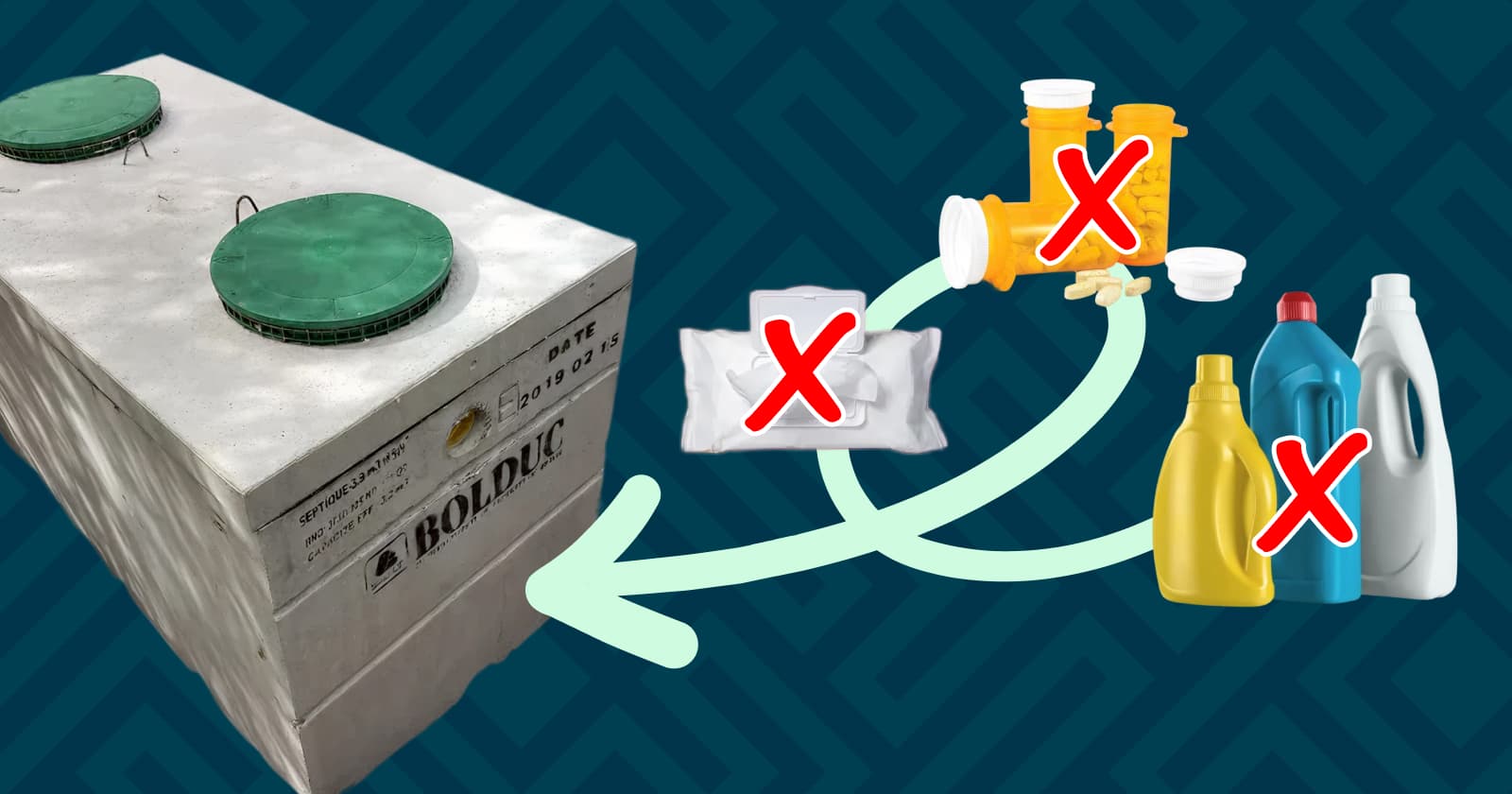
Despite the name, "flushable" wipes don't break down in septic systems. They accumulate in your tank and can clog pumps and drain fields.
Medications and Pharmaceuticals
Flushing unused medications introduces chemicals that kill beneficial bacteria and can contaminate groundwater.
Harsh Bathroom Cleaners
Ammonia-based cleaners, shower and tile cleaners with harsh chemicals, and mold removers can all damage your septic system's bacterial balance.
Paint, Solvents, and Pesticides
These toxic substances should never enter your septic system. They kill bacteria instantly and contaminate your drain field soil.
Best Practices for Septic System Health
Do:
-
Use septic-safe, biodegradable products whenever possible
-
Spread out laundry loads throughout the week rather than doing many loads in one day
-
Have your tank pumped every 3-5 years by professionals
-
Fix leaky toilets and faucets promptly
-
Keep detailed records of maintenance and pumping
-
Use enzyme additives designed for septic systems if recommended by your service provider
Don't:
-
Pour chemicals, medications, or hazardous waste down drains
-
Use garbage disposals excessively (if at all)
-
Flush anything besides toilet paper and human waste
-
Plant trees or shrubs near the drain field
-
Drive or park vehicles over the septic system
-
Ignore warning signs like slow drains, odors, or soggy spots in the yard
The Bottom Line
Your septic system is a substantial investment that requires proper care. While it may seem convenient to use powerful chemical cleaners or flush various products, the long-term cost of system damage far outweighs any short-term benefits. By choosing septic-safe products and following best practices, you can extend the life of your system, protect your property value, and safeguard the environment. Contact us today to learn more: https://flxenvironmental.com/